

How to choose the buffer? Damping buffer to take you to understand
Release time:
2022-09-02 10:19
Source:
Many machines use damped buffers. In daily use, buffers are called dampers, cushions, shock absorbers and vibration isolators. Widely used in metallurgy, aerospace, elevator, automobile, port and other industries. It is a kind of equipment and tools commonly used in various factories, and has good anti-hard impact ability.
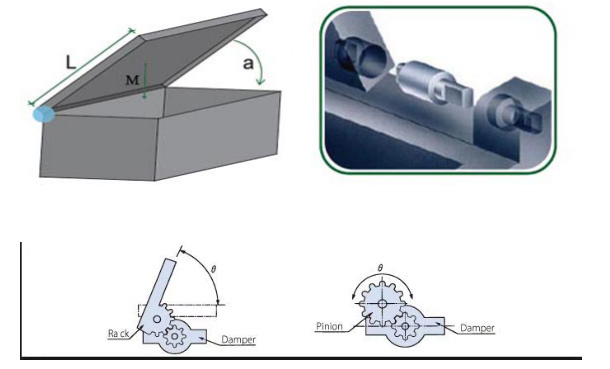
Damping Buffer says that different machines can be classified according to their use and characteristics: polyurethane buffer, hydraulic buffer, spring buffer, elastic cement buffer, etc. They all have their own advantages and disadvantages. Many of them are widely used.
Damping Buffer said that when choosing buffer elements for different machines in daily life, you need to make a choice according to your own requirements.
1. Polyurethane buffer has low price, light weight, unusual installation, long service life and time. It is widely used in many heavy machinery. It is a kind of buffer equipment widely used and common in modern times.
2. The price of the rubber buffer is usually relatively low, but the rubber buffer has good impact resistance and weak compression resistance, so the service life is relatively short.
3. Elastic cushioning. Compared with other buffers, this buffer is characterized by no environmental requirements and can be used in any harsh environment. The disadvantage is that the reaction force of the buffer is large and takes up a lot of space, so it is usually suitable for cranes of 2 meters per second.
4. The oil-gas buffer is one of the above buffers with good performance. It is an improved product of hydraulic buffer, and its performance is much better than that of hydraulic buffer. Oil and gas buffers have been well optimized in all aspects, which is a major trend in the development of the buffer industry.
5. Elastic cement buffer, also has excellent performance. And the structure design is relatively simple, relying entirely on the elastic cement with strong buffer force. Therefore, the quality is very reliable and does not require any maintenance all year round.Damping
Buffer relies on hydraulic damping to buffer and decelerate the objects acting on it until it stops, which plays a protective role to a certain extent. In many industries of metallurgy, elevator, automobile, aviation, aerospace, port machinery, railway vehicles and other mechanical equipment, it can play its role of shock absorption, deceleration, noise reduction and wear reduction.
Damping There are many types of buffers, because they are widely used and have different classifications. If you buy an inappropriate damping buffer, it will not work. Choose damping buffer in different daily machines, you can choose according to your needs.
First of all, the user needs to consider that after purchasing thedamping buffer, it will be used on the mechanical equipment. Some heavy machines have requirements in terms of life, installation and weight. Of course, some small machines also have to consider the size, model and so on.
Secondly,damping buffer capacity is also a problem that users need to consider. Each different machine requires a different capacity. The capacity required by the actual machine can be considered according to its buffer stroke to achieve a suitable effect.
In addition, consider the use conditions of thedamping buffer and some harsh working environments, so you need to buy a better damping buffer.
Related News
What is an automatic door closer and how does it work?
Learn what an automatic door closer is, how it works, the main types, installation steps, and how to choose the right one for residential or commercial use. Updated for 2026.
Door closer buying guide: what to look for in 2026
Looking for the best door closer in 2026? This complete buying guide covers types, sizing charts, brand comparisons, ADA compliance, installation steps, and troubleshooting tips for residential and commercial use.
Industrial damper vs residential damper: key specs and differences
Compare industrial damper vs residential damper across key specs, materials, load capacity, and performance standards. Learn which damper type fits your application in 2026.
Industrial damper vs residential damper: key specs and differences
Compare industrial damper vs residential damper across key specs, materials, load capacity, and performance standards. Learn which damper type fits your application in 2026.
Signs your shock absorbers are worn out and need replacing
Learn the key signs your shock absorbers are worn out and need replacing. Expert guide covering symptoms, testing methods, replacement costs, and top brands like Monroe and KYB.
Automotive damper guide: how to choose, compare, and replace the right shock absorber
Complete 2026 guide to automotive dampers: types, OEM vs aftermarket comparison, failure diagnostics, U.S. repair costs, DIY ratings, and adaptive damping explained for engineers and buyers.
Message
Professional service team answers
Contact Us
Contact: Miss Peng
Phone: +86 13537499713
Tel: +86 0769-87769161
Fax: +86 0769-87681161
Email: sales@longji-lf.com, zxm@longji-lf.com
Address: Room 201, Building 2,and Room 301, Building 4, No. 7 Jinming North Road, Xiegang Town, Dongguan City,

Scan consultation