

One-way damper: What is one-way damper? Longji plastic answers for you
Release time:
2023-03-31 13:15
Source:
One-way damper is a device developed to provide a motion resistance and dissipate the energy of the motion. Using damping to absorb energy and reduce impact is not a new technology. In aerospace development aerospace, aviation, military, automotive and other national industries, and a variety of different dampers (or shock absorbers) have been used to damp and dissipate system energy. Since the early 1970 s, people have gradually transferred these technologies to structural projects such as buildings, bridges and railways. Especially in the hydraulic viscous damper, which has been developed for more than 50 years, before the American economic structural engineering community generally accepted itself, especially during the long earthquake process, a lot of experiments, rigorous review and repeated demonstration tests have been carried out.
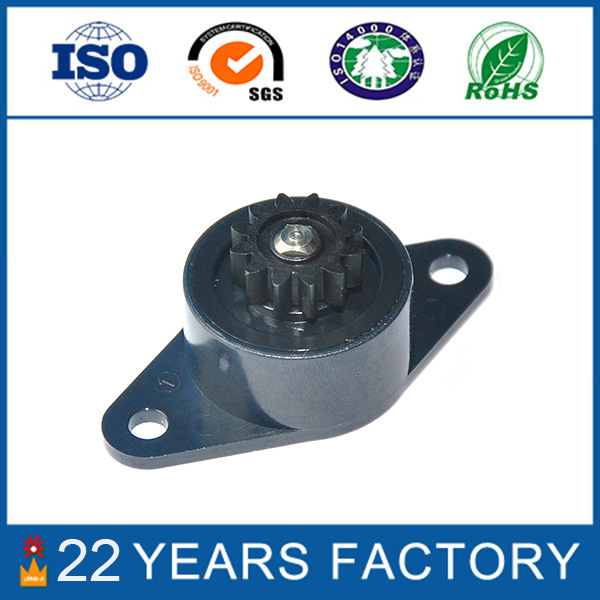
One-way damper is a device that can stop the rapid development of a movable part of the instrument in a stable deflection position. In seismic instrumentation, one-way damper can be used to absorb the inherent vibration energy of the vibration information system, and its damping force is usually proportional to the speed of the vibration data system. One-way damper There are three main types of liquid dampers, one-way damper gas damper and electromagnetic damper. One-way damper plays an important role in compensating small friction and air resistance, and improving the frequency response of the vibration sensor pendulum system.
Various frictions and other obstacles that weaken free vibration are called damping. One-way dampers placed on the structural information system by "special" component technology can provide a motion resistance and consume motion energy. We call them one-way dampers. A one-way damper is also called a damping device. A device that increases damping so that the vibration generated during impact is quickly attenuated. The ideal one-way damper is an oil damper. Commonly used one-way damping oil includes silicone oil, grate oil, mechanical oil, diesel oil and transformer oil, which can be made into plate type, piston type, cone type, cone type, etc. Others mainly include corporate solid viscous dampers, air mass dampers and friction dampers. One-way damper According to the actual needs of vibration isolation design, damping ratio D = 0.05~0.2 is better. The above
is the relevant information about one-way dampers compiled by Dongguan Longji Plastic Electronic Xiaobian. If you need one-way dampers, gear dampers, damping gears and other products, please contact us.
Prev
Related News
What is an automatic door closer and how does it work?
Learn what an automatic door closer is, how it works, the main types, installation steps, and how to choose the right one for residential or commercial use. Updated for 2026.
Door closer buying guide: what to look for in 2026
Looking for the best door closer in 2026? This complete buying guide covers types, sizing charts, brand comparisons, ADA compliance, installation steps, and troubleshooting tips for residential and commercial use.
Industrial damper vs residential damper: key specs and differences
Compare industrial damper vs residential damper across key specs, materials, load capacity, and performance standards. Learn which damper type fits your application in 2026.
Industrial damper vs residential damper: key specs and differences
Compare industrial damper vs residential damper across key specs, materials, load capacity, and performance standards. Learn which damper type fits your application in 2026.
Signs your shock absorbers are worn out and need replacing
Learn the key signs your shock absorbers are worn out and need replacing. Expert guide covering symptoms, testing methods, replacement costs, and top brands like Monroe and KYB.
Automotive damper guide: how to choose, compare, and replace the right shock absorber
Complete 2026 guide to automotive dampers: types, OEM vs aftermarket comparison, failure diagnostics, U.S. repair costs, DIY ratings, and adaptive damping explained for engineers and buyers.
Message
Professional service team answers
Contact Us
Contact: Miss Peng
Phone: +86 13537499713
Tel: +86 0769-87769161
Fax: +86 0769-87681161
Email: sales@longji-lf.com, zxm@longji-lf.com
Address: Room 201, Building 2,and Room 301, Building 4, No. 7 Jinming North Road, Xiegang Town, Dongguan City,

Scan consultation