

Some basic common sense of the damper
Release time:
2021-05-06 16:00
Source:
When the aircraft climbs to high altitude, due to the decrease of air density (change of aerodynamic characteristics), the damping of the aircraft will be reduced, causing the aircraft to oscillate easily. Consider a situation in which oscillations occur due to very little damping of the aircraft's pitch. In order to suppress the oscillation, the pilot needs to push the lever when the aircraft is looking up to prevent the aircraft from looking up, and pull the lever when the aircraft is looking down to prevent the aircraft from looking down. It is very difficult for pilots to complete the task and stabilize the aircraft at the same time. In order to improve this situation and reduce the workload of the pilot, a device was invented to replace the pilot to complete this complex operation, that is, the damper. The above is just an example of pitch, in fact, roll and yaw are similar. Dampers are divided into pitch damper, roll damper and yaw damper. When we know the working content of the damper, it is easy to understand the working principle of the damper. When the aircraft oscillates, it will produce angular velocity, and the suppression of oscillation is actually to resist the angular velocity by deflecting the rudder surface in the opposite direction. The sensor that measures the angular velocity of the aircraft is installed on the aircraft. The aircraft has three axes, so three angular velocity sensors are required. When the aircraft oscillates, the sensor senses the angular velocity, and the angular velocity is processed to generate a command to drive the corresponding control surface, which deflects to suppress the oscillation. This is how the damper works.
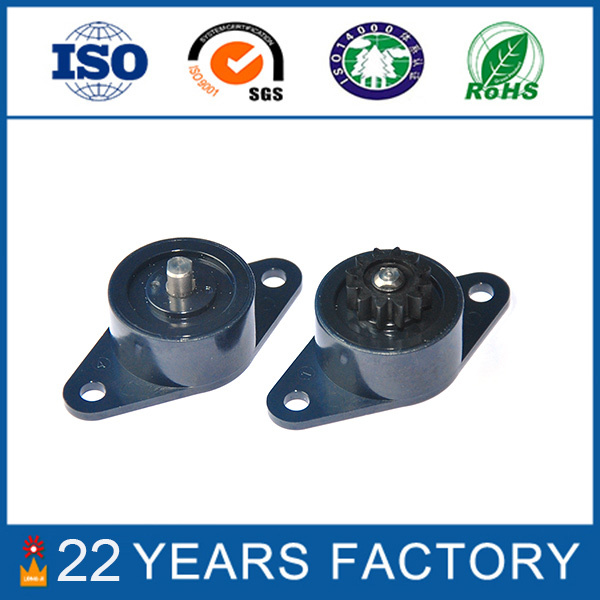
For ease of explanation, the aircraft oscillation is taken as an example. In fact, when the pilot controls the aircraft normally, the damper also plays a similar role, allowing the aircraft to quickly stabilize to the target attitude. The pitch damper drives the elevator according to the pitch rate, the roll damper drives the aileron according to the roll rate, and the yaw damper drives the rudder according to the yaw rate. Because the lateral and directional signals are coupled to each other, the lateral and directional signals are cross-linked, which means that the aileron and rudder will work together at the same time. After the yaw plug is interchanged, the roll command signal and yaw command signal are interchanged, and the command enters the wrong channel, that is, the original command to deflect the aileron is used to drive the rudder, and the command to drive the rudder is used to drive the aileron.
Why did the aircraft become unstable after the exchange? Now we need to introduce another concept, the stability of the flight control system. Dampers are also part of the flight control system. The soul of the flight control system is the control law, which is directly related to whether the aircraft is easy to drive, and even affects the safety of the aircraft. Designers need to carefully allocate a large number of parameters of the control law to make it work in harmony and have a certain degree of stability.
Related News
Message
Professional service team answers
Contact Us
Contact: Miss Peng
Phone: +86 13537499713
Tel: +86 0769-87769161
Fax: +86 0769-87681161
Email: sales@longji-lf.com, zxm@longji-lf.com
Address: Room 201, Building 2,and Room 301, Building 4, No. 7 Jinming North Road, Xiegang Town, Dongguan City,

Scan consultation