

The main points of using the toilet lid damper?
Release time:
2023-02-20 09:15
Source:
With the continuous progress of science and technology, all walks of life have also been greatly developed. The development prospect of toilet lid dampers is also very good. Therefore, the demand is increasing and many manufacturers have been added to the market. As manufacturers, it is also necessary for us to tell you the main points of using toilet lid dampers here. Interested partners can take a look together.
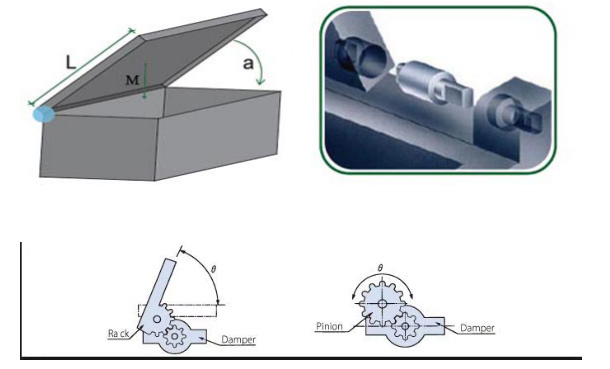
Before we use this toilet lid damper, we also have a lot of problems with everyone, so if we want to use it better, we must understand some of its knowledge points. The first thing you need to know is that the toilet lid damper is a device that can quickly stop the moving part of the meter in a stable deviation position. Compensation for small friction and air resistance in the swing system plays an important role in improving the frequency response. What are the considerations for using it? In fact, it has many functions. For example, a toilet lid damper can be used to absorb the inherent vibration energy of a vibrating system, and its damping force is usually proportional to the speed of the vibration system. There are three main types of liquid dampers, gas dampers and electromagnetic dampers. The damper plays an important role in compensating for small friction and air resistance in the pendulum system and improving the frequency response. Alternatively, a certain margin (about 10mm) can be added to the working stroke to avoid affecting the life and performance of the shock absorber due to errors in the installation process. Due to the harsh environment of construction machinery, the sealing requirements of the shock absorber are high, and dust should be prevented from entering the shock absorber during use. Also prevent sharp tools from scratching or damaging the surface of the piston rod. Do not apply paint and corrosive chemicals to the piston rod.
When using the toilet lid damper, you should know that it usually operates in the ambient temperature range of -35 to 60°C. The configuration of shock absorbers in construction machinery, because the use environment is outdoors, the service life is usually very short, so it should be considered in the design. It should also be used within the scope allowed by the buffer. Please do not use the extreme position of the buffer to stop the object. When the shock absorber is used as a stop device, personal injury and mechanical injury may occur. When installing the external limit device, please use it after confirming the allowable use angle of the buffer. In addition, everyone should pay attention when using, if it exceeds the rated torque, it will cause oil leakage, shorten the service life, damage the shaft, and even cause mechanical accidents. Please use within the torque range. It is prohibited to use outside the specified temperature range. For example, when we use it outside the specified operating temperature range, it will cause oil leakage and abnormal torque. Please use within the specified operating temperature range. It is recommended not to use it under vacuum or high pressure to avoid mechanical damage. Please keep the toilet lid damper away from cutting powder, cutting oil, liquid, etc. Do not use the toilet lid damper in an environment where it will stick to the shock absorber. This is the cause of adverse events such as damage to the toilet lid damper and oil leakage at sea. The content of the above article
is the main points of using toilet lid damper for friends, and a better toilet lid damper manufacturer is also shared in the content. if you have this requirement, you can check it out, hoping to help you.
Related News
What is an automatic door closer and how does it work?
Learn what an automatic door closer is, how it works, the main types, installation steps, and how to choose the right one for residential or commercial use. Updated for 2026.
Door closer buying guide: what to look for in 2026
Looking for the best door closer in 2026? This complete buying guide covers types, sizing charts, brand comparisons, ADA compliance, installation steps, and troubleshooting tips for residential and commercial use.
Industrial damper vs residential damper: key specs and differences
Compare industrial damper vs residential damper across key specs, materials, load capacity, and performance standards. Learn which damper type fits your application in 2026.
Industrial damper vs residential damper: key specs and differences
Compare industrial damper vs residential damper across key specs, materials, load capacity, and performance standards. Learn which damper type fits your application in 2026.
Signs your shock absorbers are worn out and need replacing
Learn the key signs your shock absorbers are worn out and need replacing. Expert guide covering symptoms, testing methods, replacement costs, and top brands like Monroe and KYB.
Automotive damper guide: how to choose, compare, and replace the right shock absorber
Complete 2026 guide to automotive dampers: types, OEM vs aftermarket comparison, failure diagnostics, U.S. repair costs, DIY ratings, and adaptive damping explained for engineers and buyers.
Message
Professional service team answers
Contact Us
Contact: Miss Peng
Phone: +86 13537499713
Tel: +86 0769-87769161
Fax: +86 0769-87681161
Email: sales@longji-lf.com, zxm@longji-lf.com
Address: Room 201, Building 2,and Room 301, Building 4, No. 7 Jinming North Road, Xiegang Town, Dongguan City,

Scan consultation